Follow Me On Social Media!
Croissant Cinnamon Rolls: Irresistibly Flaky & Buttery Delight

Introduction to Croissant Cinnamon Rolls (Flaky Laminated Cinnamon Rolls)
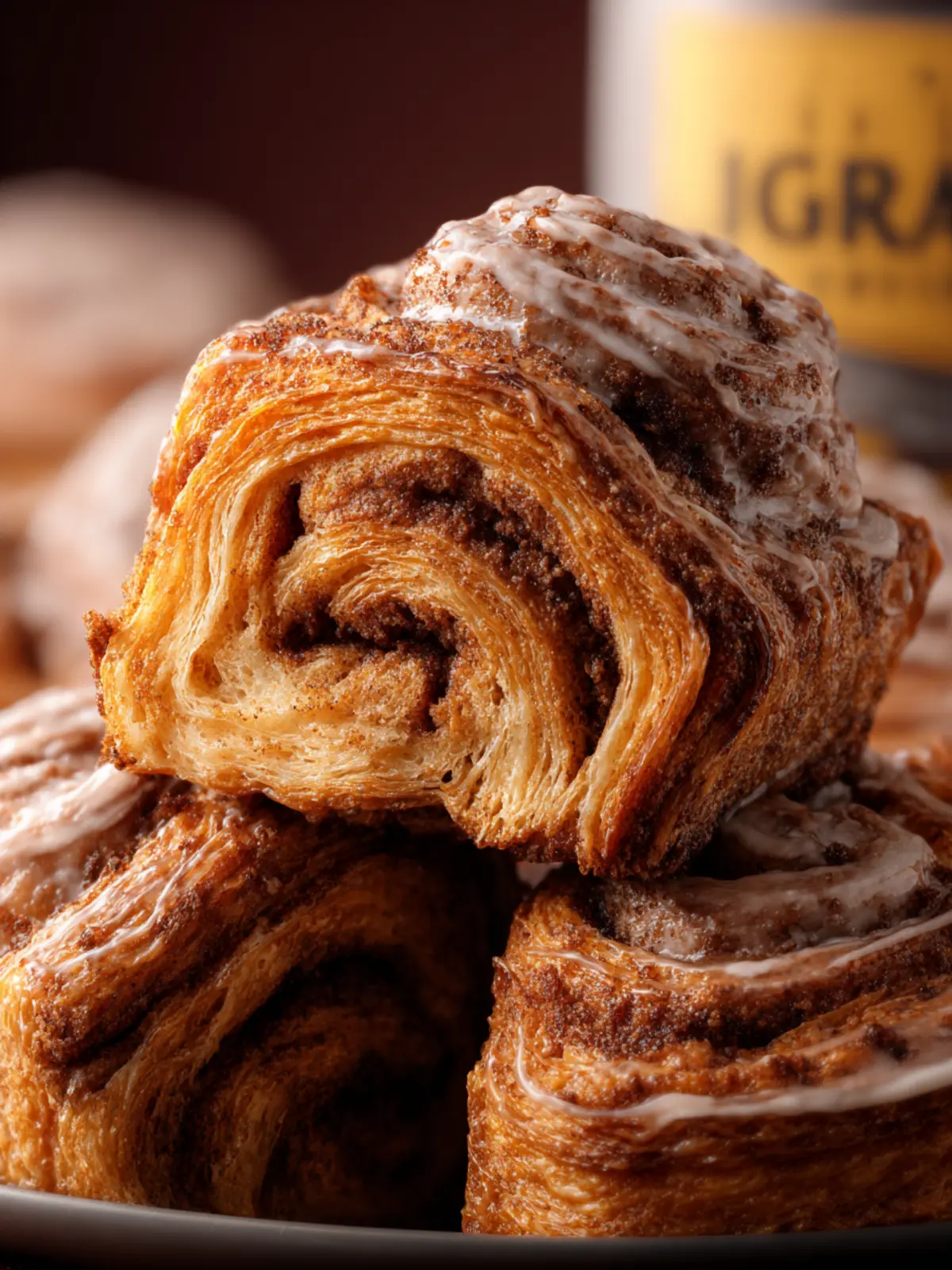
Croissant cinnamon rolls are a delightful fusion of two beloved pastries that will transport your taste buds to a world of buttery, flaky bliss. Imagine biting into a sweet, spiraled roll, only to discover the light, airy layers typical of a croissant intertwined with the comforting, aromatic essence of cinnamon. This mouthwatering hybrid combines the best aspects of each pastry, creating an unforgettable treat you’ll want to share with friends and family—if you can resist devouring them all yourself!
The magic of combining croissants and cinnamon rolls lies in their unique textures and flavors. Croissants are renowned for their flaky layers, achieved through a meticulous lamination process that creates air pockets for lightness. Traditional cinnamon rolls, on the other hand, are known for their moist, rich dough and gooey filling. By integrating these elements, you get a pastry that maintains the comforting sweetness of cinnamon rolls while introducing the sophisticated nuances of croissants.
Unleashing Your Inner Baker
For many home bakers, the idea of making croissant cinnamon rolls can feel daunting. However, the process is incredibly rewarding and allows you to impress guests, or simply treat yourself. Are you ready to roll up your sleeves and venture into this new baking territory? The key to success lies in understanding the ingredients and techniques involved.
Skill and Time: While the process requires patience and practice, it’s an opportunity to hone your baking skills. Creating your own laminated dough may seem like a task best left to the professionals, but with a little dedication, you can achieve this fluffy marvel in your own kitchen.
Ingredients Matter: Each component plays an essential role in achieving that perfect balance of flavor and texture. From the rich butter to sweet cinnamon and the all-important flour, knowing your ingredients will set you on the path to croissant cinnamon roll perfection.
By embarking on your journey to create these flaky laminated cinnamon rolls, you’ll discover the joyful art of baking while treating yourself to an indulgent experience that’s worth every bite.
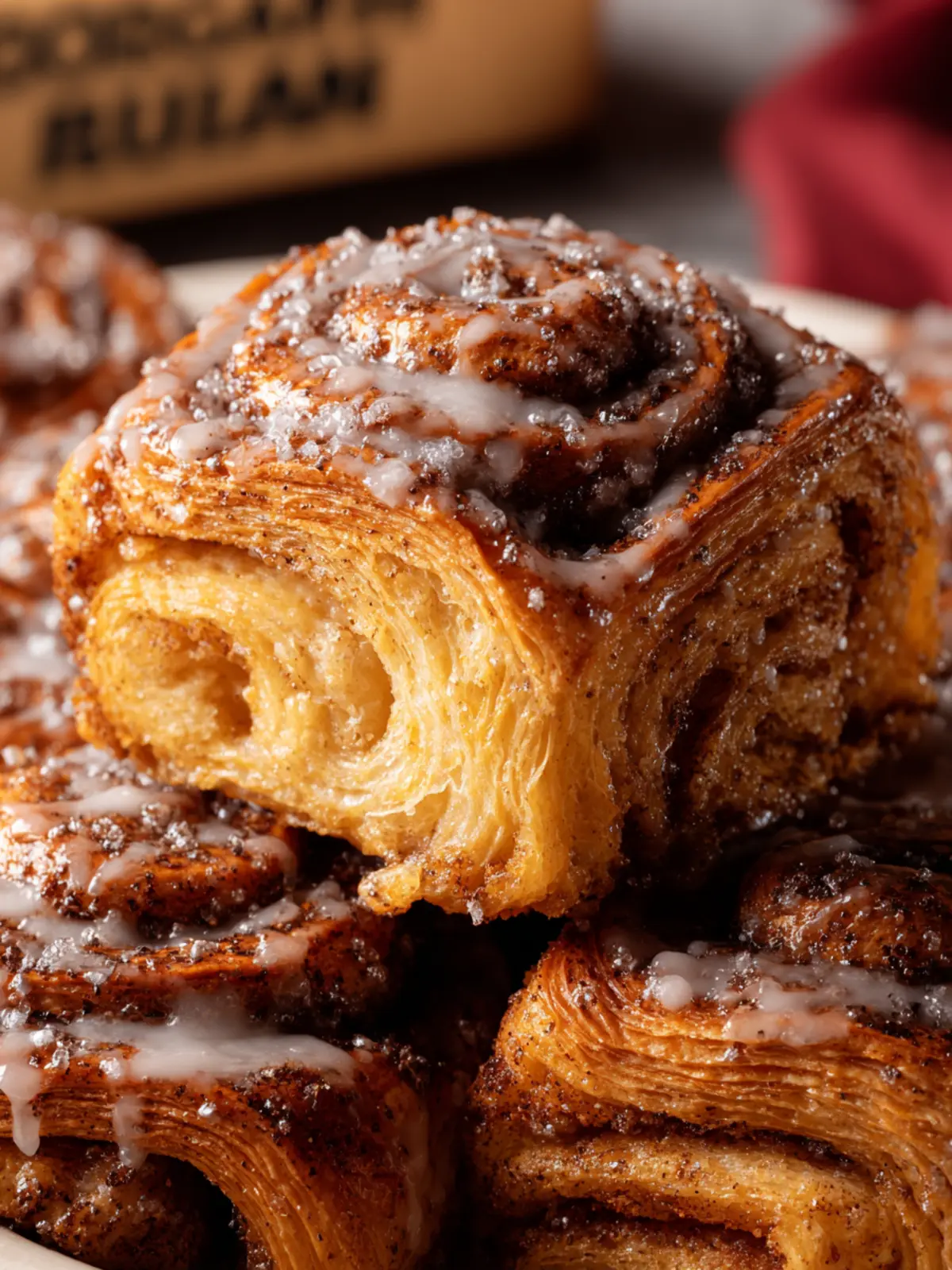
Key Ingredients for Croissant Cinnamon Rolls
Flour: The secret to achieving the perfect texture in these croissant cinnamon rolls lies in a blend of all-purpose flour and bread flour. This combination gives you that delightful balance of flakiness and chew that makes each bite irresistible.
Butter: Quality matters! Using a high-fat butter like Plugrà is key here. It not only contributes to those lovely flaky layers but also adds a rich flavor that enhances the overall experience, resulting in a tender crumb that keeps you coming back for more.
Yeast: Instant yeast is the unsung hero in this recipe, ensuring a quick rise without the long waiting times. You’ll be rewarded with a soft, airy texture that elevates these rolls to a bakery-like standard.
Sugar: Granulated sugar sweetens the dough perfectly, while light brown sugar, nestled in the filling, brings depth and moisture to each roll.
Cinnamon: Ground cinnamon infuses your rolls with a warm, indulgent spice that makes them feel luxurious and comforting.
Cream Cheese: For the glaze, softened cream cheese is a must. It adds a rich, tangy finish that’s perfectly complemented by a touch of vanilla, making each roll even more delectable.
Why You’ll Love These Croissant Cinnamon Rolls
Elevate breakfast with a touch of French pastry
Imagine waking up to the scent of freshly baked goods wafting through your kitchen—a true morning delight. These croissant cinnamon rolls are not just any ordinary breakfast treat; they seamlessly blend the classic flaky layers of croissants with the warm, cozy flavors of cinnamon rolls. Each bite offers an irresistible combination of buttery, flaky pastry and sweet cinnamon goodness that’ll have you savoring every mouthful.
The joy of making croissant cinnamon rolls comes from the transformation process. Watching the dough turn from a simple mix of flour, butter, and sugar into delicate layers creates a sense of accomplishment. When you roll the dough and sprinkle it with cinnamon and sugar, it’s hard not to feel giddy with anticipation. What’s even better? You can impress your friends and family with a pastry that looks like it came straight from a Parisian bakery.
Whether you’re treating yourself on a lazy Sunday or impressing guests at brunch, these croissant cinnamon rolls will elevate your breakfast game to a whole new level. They’re perfect not just for the taste but for the experience of creating something truly special with your own hands. Enjoy every flaky, cinnamon-swirled bite!
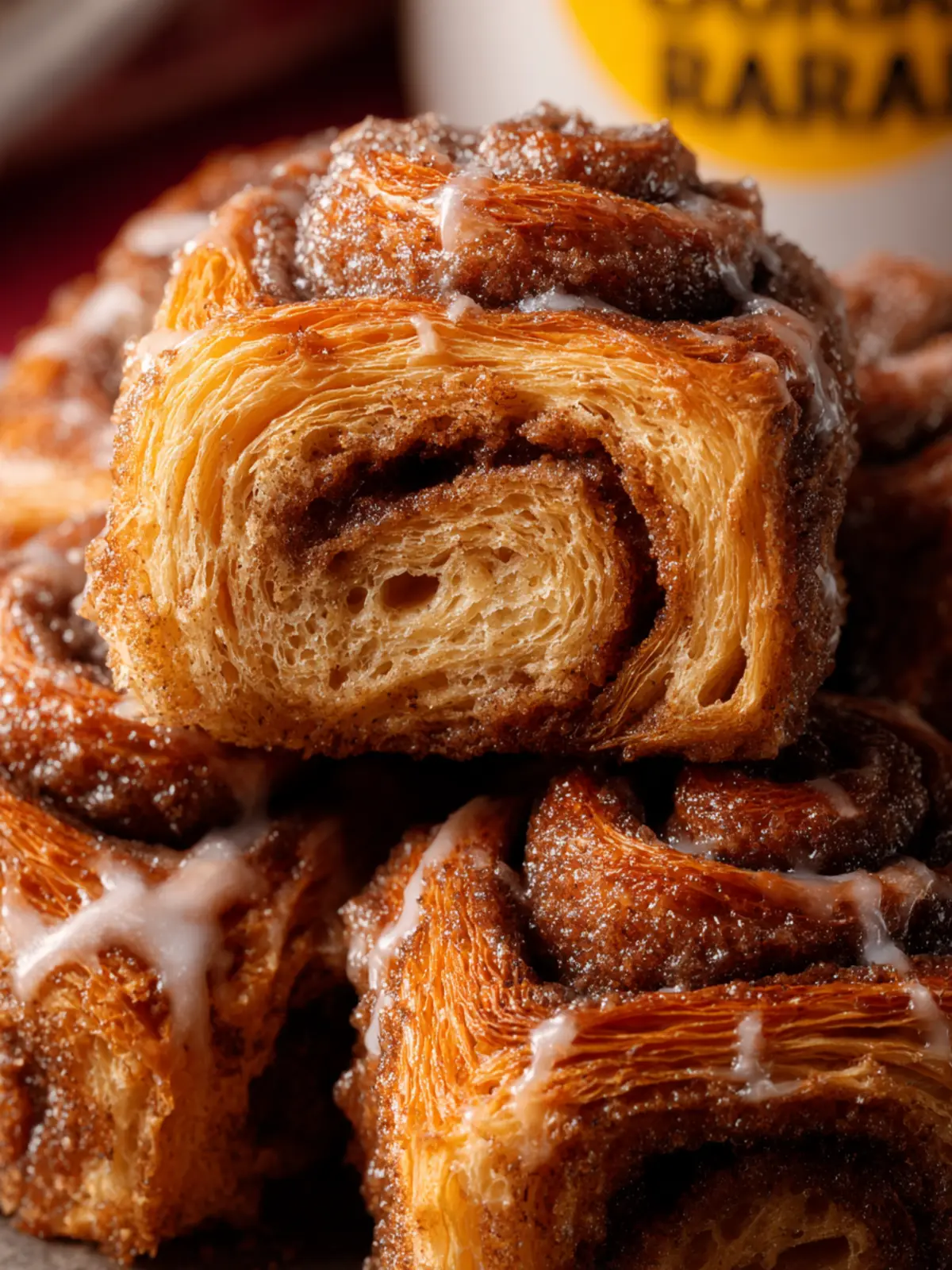
Tips for Making Perfect Croissant Cinnamon Rolls
Creating croissant cinnamon rolls is an art that combines the flaky, buttery goodness of croissants with the warm sweetness of cinnamon rolls. With a few thoughtful tips, you can achieve the pinnacle of pastry perfection.
Handling the Dough and Butter for Maximum Flakiness
Working with the dough and butter properly is crucial for achieving that coveted flaky texture. Here’s how to maximize your results:
- Keep Everything Cold: Use chilled butter and water to prevent the butter from melting into the dough too early. The cold temperature helps the layers remain distinct during baking.
- Roll Wisely: When rolling out your dough, use gentle pressure. This will allow you to create layers without compressing the dough too much. Aim for a rectangle shape for even layers.
- Resting Time: Don’t skip the chilling steps between folds. Giving the dough time to rest in the fridge allows the gluten to relax and helps maintain the integrity of the layers.
Proofing and Baking Techniques for Best Results
Getting the proofing and baking just right is essential for those picture-perfect croissant cinnamon rolls.
- Proper Proofing: Allow the rolls to rise until they double in size. A warm, draft-free environment works best. Consider turning your oven on for a few minutes and then off, using the residual heat for proofing.
- Baking Perfection: Be mindful of oven temperature. Bake at a higher heat for the first 10 minutes to create a beautiful rise, then lower the temperature to ensure even baking. Check for a golden-brown appearance to indicate they’re ready.
- Glazing: Brush with butter or a simple glaze while warm. This adds a shine and enhances the flavor, bringing out the warmth of the spices.
With these tips in hand, you’re well on your way to creating impressive croissant cinnamon rolls that will impress friends and family alike!
Time Details for Croissant Cinnamon Rolls
Creating delicious croissant cinnamon rolls is a labor of love that requires some time management to achieve that perfect flaky texture. Here’s a breakdown of the time you’ll need to dedicate to this delightful pastry.
Preparation time
Gathering your ingredients and kneading the dough typically takes about 30 minutes. Make sure everything is at room temperature for best results.
Chilling time
To achieve those perfectly layered flakes, the dough needs to chill for approximately 2 hours. This step is crucial for the butter to firm up and ensure a flaky finish.
Baking time
Once your rolls are assembled and proofed, baking takes around 25 to 30 minutes. You’ll want to keep an eye on them to catch the golden brown hue.
Total time
Factoring in prep, chill, and bake, you’re looking at roughly 2.5 to 3 hours to enjoy your freshly baked croissant cinnamon rolls. A small investment for a sweet reward!
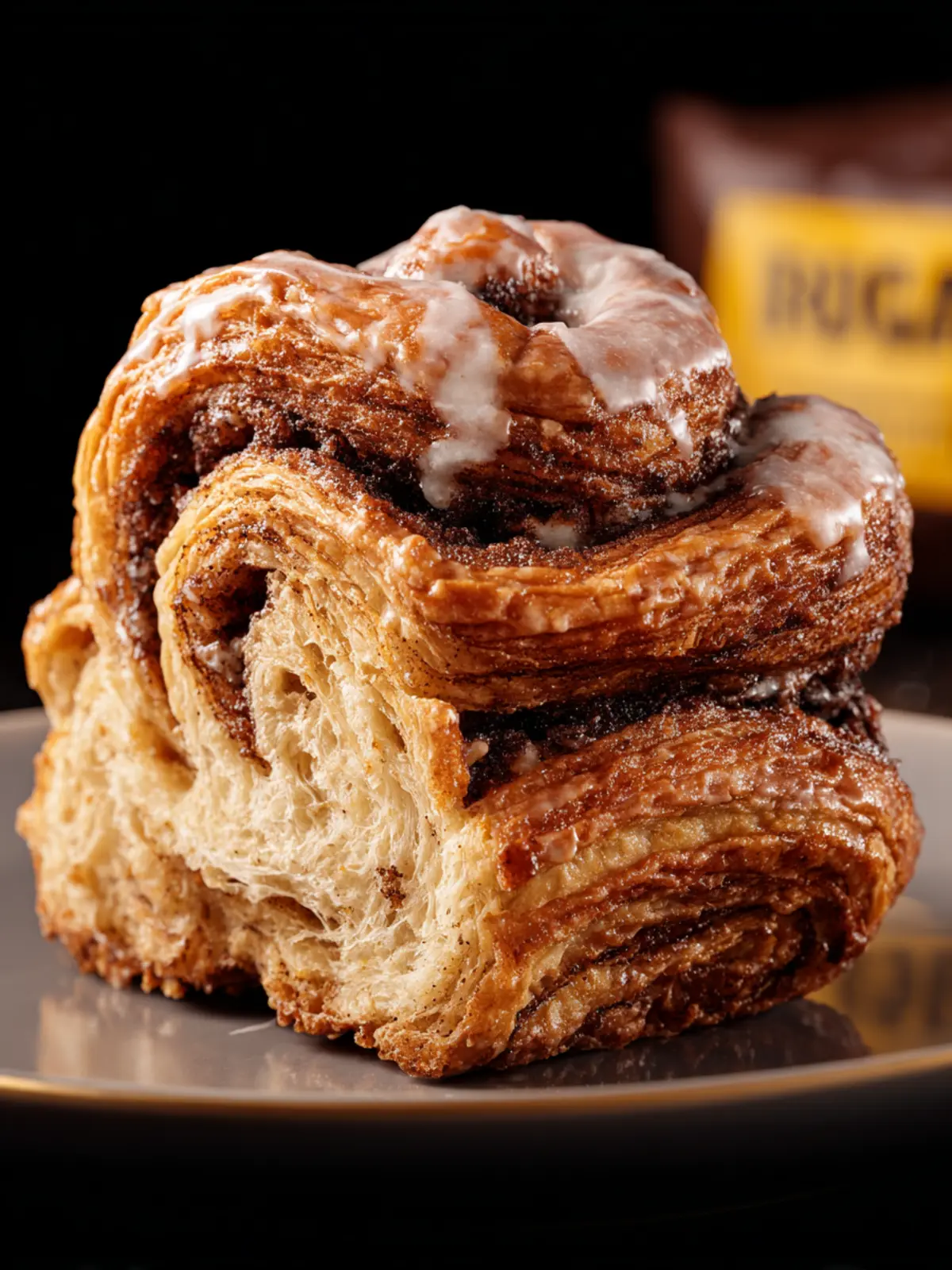
Nutritional Information for Croissant Cinnamon Rolls
When indulging in the delectable joy of Croissant Cinnamon Rolls, it’s good to understand their nutritional aspects. These tender, flaky rolls not only provide a delightful experience but also come with specific nutritional values.
- Calories: Each croissant cinnamon roll contains approximately 320 calories, making it a perfect treat for breakfast or dessert.
- Protein: With around 4 grams of protein per roll, they contribute to your daily intake, though they are not the primary source of protein.
- Sodium: These rolls have about 330 mg of sodium, so if you’re monitoring salt intake, be mindful of portion sizes.
- Sugars: Each roll contains around 12 grams of sugar, adding just the right touch of sweetness to your day.
Enjoy every bite while being aware of these values!
FAQs about Croissant Cinnamon Rolls
When you’re diving into the world of croissant cinnamon rolls, a delightful fusion of flaky pastry and gooey cinnamon goodness, you might have a few questions. Don’t worry—I’ve got you covered. Here are some of the most common queries that arise while preparing these mouth-watering treats.
What happens if I don’t have instant yeast?
If instant yeast is out of stock, don’t fret! You can substitute it with active dry yeast—just make sure to activate it first. Mix the active dry yeast with warm water and a pinch of sugar, letting it sit for about 5 to 10 minutes until bubbly. This will ensure your dough rises beautifully, giving those croissant cinnamon rolls their signature flakiness.
How can I achieve the best layers?
Creating those perfect layers is all about proper folding and rolling techniques. After your dough has chilled, make sure each time you roll and fold, you’re applying even pressure. Use cold butter for lamination, and don’t skimp on the chilling time. This helps to solidify the butter in the dough, which is key to achieving those irresistible flaky layers.
Can I make these rolls ahead of time?
Absolutely! One of the great things about these rolls is that they can be made in advance. You can prepare the dough and shape the rolls the night before. Just cover them well and place them in the fridge overnight. In the morning, let them proof at room temperature for about 30 minutes before baking. Fresh croissant cinnamon rolls without the morning rush? Yes, please!
What can I use as a substitute for cream cheese in the glaze?
If you’re in a pinch and lack cream cheese for the glaze, mascarpone or Greek yogurt can work as excellent alternatives. They provide a similar tangy flavor and creamy texture, ensuring your glaze is still rich and delicious. A bit of vanilla extract can help tie the flavors together nicely, making your croissant cinnamon rolls an irresistible treat.
Conclusion on Croissant Cinnamon Rolls
These croissant cinnamon rolls are the perfect blend of buttery flakiness and sweet cinnamon goodness. As you pull them apart, the layers of pastry reveal a delightful filling that’s bound to comfort any sweet tooth. Imagine enjoying them fresh from the oven, where the warm aroma fills your kitchen and creates lasting memories with friends or family.
Remember, mastering these treats may take a little practice, but the joy on your plate is well worth the effort. Dive into this recipe and discover your own unique twist. Who knows? You might just create a new favorite family tradition with these delectable rolls. Enjoy every bite!
Print
Cinnamon Rolls
- Total Time: 2 hours 15 minutes
- Yield: 8 rolls 1x
- Diet: Vegetarian
Description
Delicious homemade cinnamon rolls with a creamy glaze.
Ingredients
Scale
- 400 g all-purpose flour (Read notes)
- 100 g bread flour
- 60 g granulated sugar
- 10 g fine sea salt
- 9 g instant yeast
- 310 g whole milk (cold)
- 30 g unsalted butter (very soft)
- 283 g Plugrà unsalted butter (cold but pliable, cut into slices)
- 160 g light brown sugar
- 12 g ground cinnamon
- 8 g cornstarch or all-purpose flour
- Pinch of salt
- 20 g unsalted butter (melted for brushing)
- 55 g cream cheese (very soft)
- 180 g powdered sugar
- 20 g milk or cream (adjust for consistency)
- 1 teaspoon vanilla extract or vanilla bean paste
- Pinch of salt
Instructions
- In the bowl of a stand mixer, whisk together the all-purpose flour, bread flour, sugar, salt, and yeast.
- Add the cold milk and soft butter.
- Mix on low speed for 3–4 minutes until a shaggy dough forms.
- Increase to medium-low speed and mix another 3–4 minutes until smooth and elastic. The dough should be soft but not sticky.
- Shape into a rectangle about 1 inch thick, wrap tightly, and refrigerate for 30–45 minutes.
- On a sheet of parchment paper, draw a 7 × 8-inch rectangle using a ruler and marker. Flip the parchment over so the ink side is facing down (this prevents ink transfer).
- Put the cold but pliable butter slices in the center of the drawn rectangle on the clean side of the parchment. It’s okay if it doesn’t fill the shape yet. Place a second piece of parchment on top. Using a rolling pin, gently pound the butter to start flattening it. This softens it evenly without warming it too much.
- After pounding, begin rolling the butter outward toward the corners of the rectangle, using the drawn lines as your guide. Keep the edges as straight as possible.
- If needed, lift the parchment and use a bench scraper or your hands to press and straighten the sides so you end up with a neat, even 7 × 8-inch rectangle of consistent thickness.
- Refrigerate the butter block until it is cold but still bendable. It should feel firm, but if you flex it gently, it shouldn’t crack. If it’s rock hard, let it sit at room temperature for 3–5 minutes before laminating.
- Roll the chilled dough on a lightly floured surface into an 8 × 16-inch rectangle. Keep the edges straight and thickness even. If the dough resists or shrinks back, let it rest 5–10 minutes before continuing.
- Place the butter block in the center of the dough so it covers half the rectangle. Fold the dough over the butter to fully enclose it, aligning edges carefully. Pinch the seams closed and press gently to seal so no butter is exposed.
- Fold into thirds like a letter. Fold the top third down, then fold the bottom third up over it. This completes the first fold. Wrap tightly in plastic wrap and refrigerate for 30 minutes to firm the butter and relax the gluten.
- Rotate the dough 90 degrees (so the folded edge is on your left like a book spine). Roll again into a 10 × 20-inch rectangle, keeping the thickness even and edges straight. If the dough springs back, chill 10–15 minutes before rolling further.
- Fold into thirds again. Wrap tightly and refrigerate for 30–40 minutes. The dough should feel cool and slightly firm before continuing.
- Roll slightly thicker into an 8 × 15-inch rectangle for the final fold. Handle gently and avoid excessive pressure to preserve the layers.
- Fold into thirds one last time. Wrap tightly and refrigerate for 45–60 minutes before rolling out to add the filling and shape the cinnamon rolls.
- In a medium bowl, mix the brown sugar, cinnamon, cornstarch (or flour), and a pinch of salt until evenly combined. Set aside.
- Roll out the dough: On a lightly floured surface, roll the chilled laminated dough into a 14 × 16-inch rectangle, about ¼-inch thick. Try to keep the thickness even so the rolls bake uniformly.
- Lightly brush the surface of the dough with melted butter (optional but recommended for richer flavor and better filling adhesion).
- Sprinkle the cinnamon sugar mixture evenly over the dough, leaving about ½ inch bare along one long edge to help the seam seal. Lightly press the filling into the dough with your hands or a rolling pin (very gently) so it adheres to the melted butter and doesn’t spill out as much while rolling and slicing.
- Starting from the longer side, roll the dough up into a tight log. Roll steadily but gently, tight enough to create defined swirls, but not so tight that the filling squeezes out.
- Finish with the seam on the bottom of the log and gently press to seal. (Keeping the seam underneath helps prevent the rolls from unrolling during proofing and baking.)
- Trim a thin slice off each end to clean up the edges, then cut into 8 even rolls.
- Arrange rolls in a parchment-lined 9 × 13-inch pan, spaced evenly. Place each roll so the loose end (“tail”) is pointing towards another roll (not sticking outward). This helps keep the spiral tight so they don’t open up too much while proofing/baking.
- Cover loosely and proof until noticeably puffy and the rolls are just touching or nearly touching in a cool kitchen (around 70°F): about 1½–2 hours. In a warm kitchen: proofing may be faster; they should look lighter, inflated, and jiggly when you gently shake the pan.
- Once proofed, place the pan in the refrigerator for 15–20 minutes while the oven preheats. This firms the butter layers again and helps the rolls bake up flakier with cleaner layers.
- Preheat oven to 400°F. Bake for 10 minutes, then reduce the oven temperature to 375°F and bake 15–20 minutes more, until deeply golden and baked through.
- Let the rolls cool in the pan for 10 minutes before glazing so the glaze melts slightly but doesn’t disappear completely.
- Beat the softened cream cheese until completely smooth. Add powdered sugar, vanilla, and a pinch of salt and mix until smooth.
- Whisk in milk or cream a little at a time until the glaze is thin and pourable (a thin glaze keeps the flaky layers visible).
- Drizzle glaze over warm rolls and serve immediately.
Notes
- For a richer flavor, consider using vanilla bean paste instead of vanilla extract.
- Ensure the butter block is pliable but not too soft to avoid melting during the lamination process.
- Prep Time: 45 minutes
- Cook Time: 30 minutes
- Category: Breakfast
- Method: Baking
- Cuisine: American
Nutrition
- Serving Size: 1 roll
- Calories: 350
- Sugar: 18 g
- Sodium: 250 mg
- Fat: 15 g
- Saturated Fat: 9 g
- Unsaturated Fat: 3 g
- Trans Fat: 0 g
- Carbohydrates: 45 g
- Fiber: 1 g
- Protein: 5 g
- Cholesterol: 30 mg